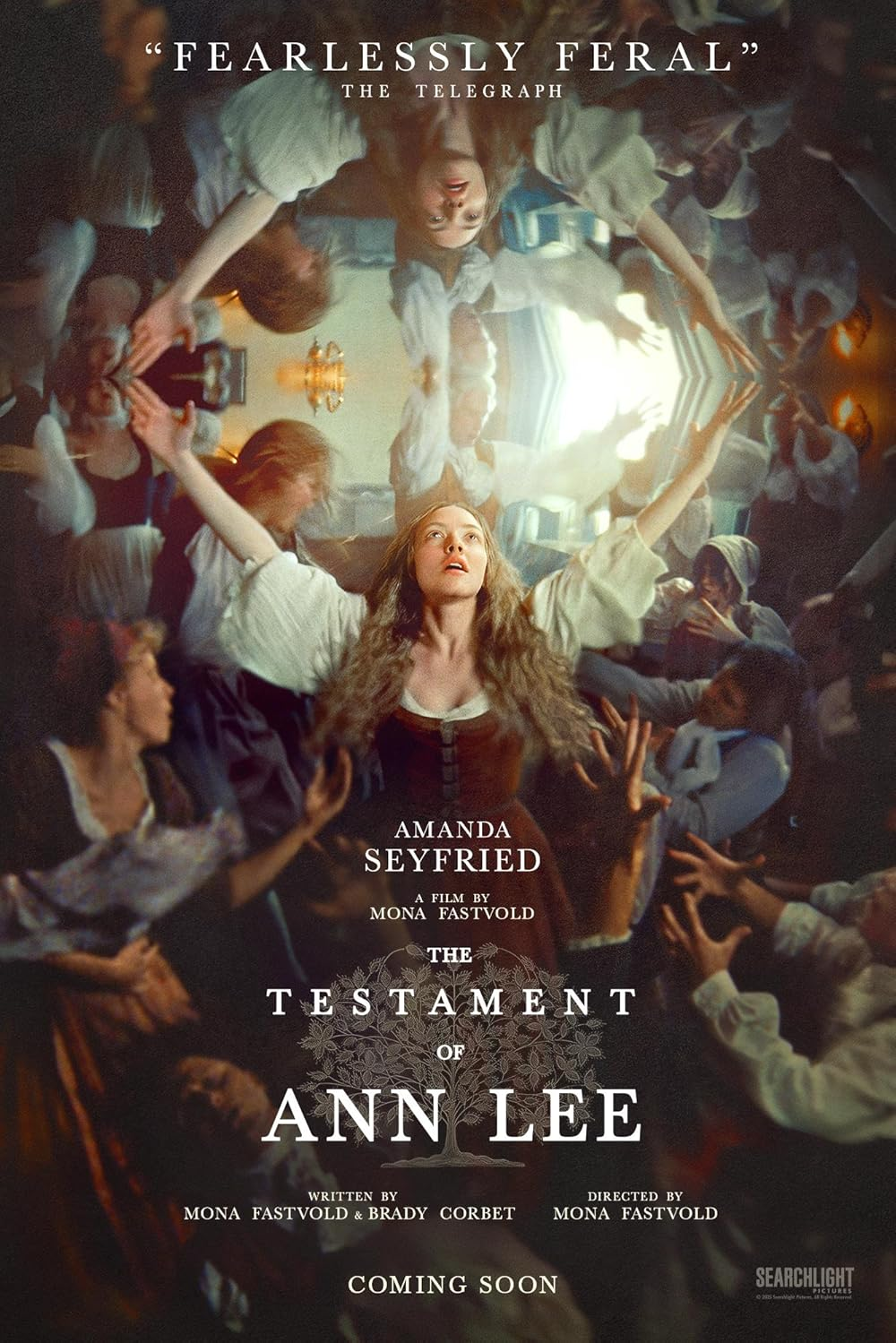
The Testament of Ann Lee

Mona Fastvold’s latest endeavor is almost impossible to describe, but will certainly cast its bizarre spell on many viewers. Amanda Seyfried gives her most potent performance yet, portraying a woman whose faith and guidance becomes relentless in the face of tragedy and hardship. The film brings to light the story of the Shakers, a religious group whose form of worship and communion were rather unique, and compliments the musical element of the film, as their worship is practically in very visceral song and dance. Lewis Pullman and Thomasin McKenzie also greatly stand out here.

The cinematography and the editing make the film almost dream-like, to evoke the state of divinity the worshippers must’ve felt, but also touches on intense and difficult imagery that tests the characters and their surroundings to the brink. Though it’s a slow burn that may lose some for various reasons, it’s also captivating and singular. It works not just as a biopic but as a fascinating experiment that boasts a tremendous leading performance from Seyfried. The film is darkly beautiful and visionary, and it’s impossible to resist its hallucinatory trance.
Is This Thing On?

There’s something pure in seeing the healing nature of art and how it helps people through tough times — but watching a character embrace stand-up comedy means both the audience within the movie and the audience of the film, as in us, gets to laugh, if the movie’s well-written enough. Is This Thing On? hits all the right notes thanks to its funny and vulnerable script and pitch-perfect casting of its two leads.

Will Arnett gives far and away the most wonderful performance of his career, never letting his signature goofiness get in the way of something raw and delicate. The way he finds joy through a new hobby, and many who find that comedy puts just a little beneath his wings, feels so cinematic. Laura Dern is terrific and gives so much to the character’s complexity, and at times the story is very much her own.

Cooper’s direction knows when to be showy and when to close in very intimately, while the script does a great job portraying the complexities of love, even as its practicality and patience fades, and sometimes even reignites. What thankfully subverts expectations is that neither character going through this divorce is “unlikable” or acting in a way that feels to irrational or hard to sympathize with. They can be flawed and distant, but very much easy to care for and understand. Arnett and Dern are splendid together and feel so perfectly matched every second we see them both on the screen. The film has just the right amount of silly yet smart laughs, which never compromise the film’s truthful humanity and intelligence.

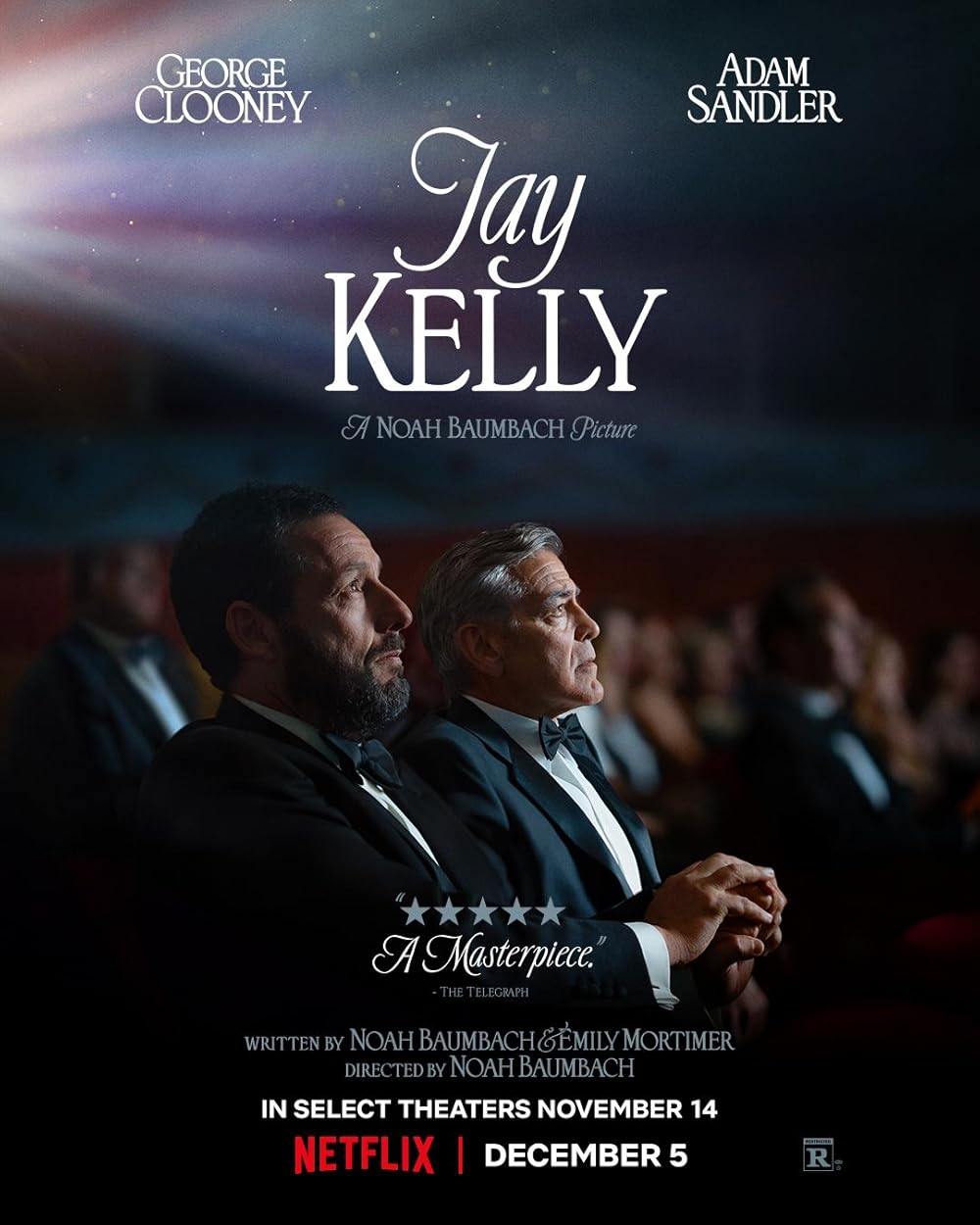
Jay Kelly

Noah Baumbach’s largest film in cast and scale isn’t his best work or even close, but certainly one of his most ambitious. George Clooney stars as the titular Hollywood actor seeking to reconcile with his daughters as he is about to be given a lifetime achievement honor in Europe. Jay’s relationship with his manager Ron is the film’s real heart here, with Adam Sandler not only stealing the entire film but giving one of the best performances of his entire career. Ron is torn between his devotion to his client and dear friend, and the heartache of missing out on time with his wife and kids. Sandler gives the character a dimensional charm, conflict, and vulnerability. Laura Dern is also outstanding as Jay’s publicist, also frustrated as she’s desperately trying to fulfill the impossible role of chasing Jay around and covering for him.

Many other familiar faces give very strong performances here, although Baumbach’s directing here stands out even more than his writing this time around. The film’s approach to memory and distance is very interesting, as is the idea of this “king” finally spending time with ordinary people who perceive him as a legend of sorts. However, the main storyline between Jay and his daughters doesn’t quite have the emotional weight that’s needed, with the themes being a bit too obvious and the film just lacking enough screen time with his youngest daughter to feel the way the movie wants us to about the main father-daughter relationship here. A performance moment and line delivery from Clooney in the film’s final moments, however, elevates the entire film and brings the themes full circle, even if it takes that long for them to really hit hard. Jay Kelly doesn’t live up to the excellence of Baumbach’s best storytelling like Marriage Story, but is still big yet introspective, with Clooney and Sandler standing out together, and the latter’s performance resonating in particular.

Zootopia 2

Zootopia 2 expands on its titular setting in ways that contrary to many big sequel, feel natural to the world of its story and quite visually intriguing. Though it can’t recapture the magic of Zootopia (to be fair, almost no animated movie can), this sequel is engaging, charming, and incredibly funny, despite a rushed start. Ginnifer Goodwin and Jason Bateman contribute to the great, if rocky, dynamic duo that is Judy Hopps and Nick Wilde, now partners on the Zootopia police force and looking to do some good together. Though at first it feels like Nick has unlearned much of what he learned in the first film, we soon come to understand his motivations and where their friendship goes is very heartfelt and excellently written. Fortune Feimster, Ke Huy Quan, and Andy Samberg stand out the most as new characters in the mix, particularly Feimster as a lovable new ally of the duo.

The film may miss the thematic weight of the first film, but still has an interesting, if unsubtle, message that parents can grasp onto profoundly and discuss with their children. It does rely overly on reference and callbacks to the first film for laughs, but also is its own film when it needs to be, with engaging settings and a conflict that starts off predictable but gets more and more fun. Even if it’s a significant step down from its predecessor, it’s got fun for all ages and a ride that was worth the wait.

Hamnet

In Hamnet, Chloe Zhao seeks the beauty in stillness, and in our flow through the world around us. The film serves as an almost anti-biopic, focusing on the most legendary poet’s inception of one of the most legendary plays ever, though the film isn’t told through William Shakespeare’s eyes — he’s only over mentioned by name once. The center of the film is his wife Agnes, as their love begins a family and interacts with art and time. Jessie Buckley gives a performance that packs such a punch to the gut and demands such dedication in every scene. The relentless devotion of a mother to fight for her kids is on full display in Buckley’s Oscar-worthy turn, as is the anguish of distance and loss. Paul Mescal also digs into a deep devastation as Shakespeare; for him, unlike Agnes, mere love is not enough to satisfy him as he pursues his artistic endeavors in addition to his familial duties. Noah Jupe and his brother Jacobi Jupe, who makes his acting debut, are both incredible in different roles that will stick with you long after the film ends.

Zhao’s filmmaking brings you into an environment that’s calm and safe yet devastating and Earth-shaking, like a lullaby that opens you up into vulnerability, and perhaps even tears. The cinematography by Lukasz Zal is daring and continues to surprise and stun, while Zhao’s deep connection to nature is ever present. The score by Max Richter is captivating and no small part in this masterful experience. Ultimately, the film is about the relationship between love and patience. When people love in such sweeping, and even different ways, love takes its time through hardship, space, creation, and death. Love is tender yet ferocious and enduring in Zhao’s eyes, and her transcendent and meditative film takes us on a profound journey that we may not emotionally disembark for long after it ends.

Wake Up Dead Man: A Knives Out Mystery

Beyond the sharp and satirical writing he’s known for, Rian Johnson shines in today’s cinematic world as a brilliant and wonderful director. From the visual humor to his incredible attention to production design, storytelling and revelations through editing, and even the smallest things like the sound design when characters speak and the pace of dialogue and events, Wake Up Dead Man proves Johnson yet again as not just a writer who loves surprises and fun, but an unrivaled filmmaker. Even when the satire isn’t quite as revolutionary as in the last two films, there’s so much more that’s allowed to take center stage here that the movie didn’t need some social messages to resonate. 

Daniel Craig as Benoit Blanc is a protagonist like no other, a beacon of clarity, charisma, and fun who we’ll never be able to have enough of. When Blanc isn’t front and center in the script, the film still thrives, thanks to a riveting story and fantastic performances from Josh O’Connor, Glenn Close, Josh Brolin, and more. The film unravels itself like a snake, with plenty of surprises, twists, turns, and unique structural choices. Every scene seems to get better than the last and the reward lasts until the very end. The film seems to be commenting on the idea of truth, storytelling and myth — in this case, packaged as faith — sealing some off from objective reality and keeping many of us in our comfortable, tight circles in which we’re never challenged. All the while, the film is exciting, beautiful to look at, and packs irresistible performances and dialogue. With Rian Johnson, even when we don’t know what’s about to happen, we always know we’re in the best hands.

Wicked: For Good

Wicked: For Good‘s rushed pacing feels like quite a whiplash from the slow burn of the first film that allowed its story to breathe much more, but it’s still a big, loud, and rewarding musical experience. The events are moving at such a fast pace that if you think about it too much, it starts to fall apart. The cinematography and editing don’t get that same patience that made the execution in the first movie so beautiful. The first act of For Good does feel a bit like its embracing the spectacle more than the soul, and if Part I felt more like its stage musical adaptation roots, this movie is the big fantasy action blockbuster. That said, it rises up to the challenge with truly great visual effects and breathtaking production design. The musical numbers are no less impressive, and the film’s heart is strong, and the chemistry between its two leads is electric.

Cynthia Erivo is again astounding and contributes to some of the film’s most awe-inspiring moments, while Ariana Grande is even better than she was in the first film. Glinda’s selfishness isn’t justified, but her softness and journey towards goodness make her so interesting to watch, even if it’s more thanks to Grande’s performance than where the script takes her. Jonathan Bailey also shines in one of the film’s most complex portrayals. There are some true show-stoppers in the soundtrack thanks to magnificent work from Erivo, Grande, and Jeff Goldblum. The music, vocals, and sets come together for some incredible musical moments that culminate the film’s emotion in great catharsis. It also very much enriches the story of the original Wizard of Oz in many creative and unexpected ways.

Wicked: For Good isn’t as subtle or as earth-shattering for the musical film genre as its predecessor, but the direction is still so lively and the spectacle is so, well, spectacular, that it’s an exciting and rewarding experience for film and theater fans alike. Together with the first film, it not only reignites but expands on and gives new life to a cultural moment like no other, and a trip to Oz that you have to see on a big screen.

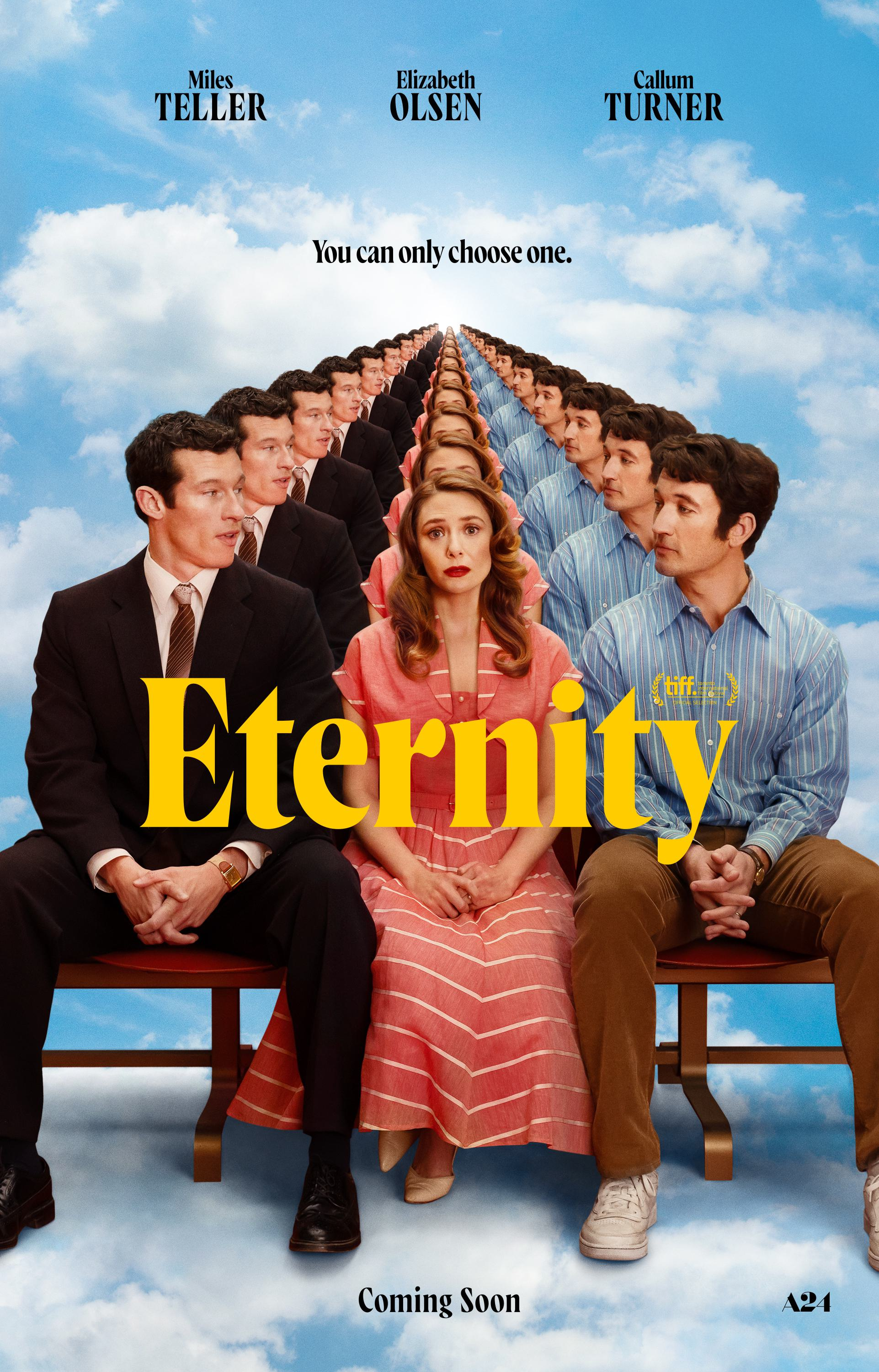
Eternity

A sharp, lively, and heartfelt rom-com set in the afterlife, Eternity asks questions about true love — is it forever? Can we have more than one in our lives? And how does love truly persevere over time?

Miles Teller and Elizabeth Olsen in particular stand out, offering emotionally rich performances while balancing humor and genuine shock at the situation they’ve found themselves in. I mean, not everyone is faced with a love triangle that will decide the rest of their existence in the afterlife. Callum Turner gives one of his most multi-dimensional performances, while Da’Vine Joy Randolph is also a magnificent standout here, giving the film much of its funniest and strongest moments. 

The production design is beautifully imaginative, combining retro technology with something that’s lively and fantastical. Exploring the corners of this dimension or plane is fascinating, and it very creatively tackles its themes that may hit hard for some audience members. It’s a touching romantic comedy, but also colorful and oozing with imagination and heart, along with high levels of belly laughter and much comedic and dramatic range from its lead trio of actors.

Rental Family

Brendan Fraser gives an empathy, softness, and delicacy to the lead character, an actor who joins a Japanese “rental family” agency, playing stand-in roles for strangers. He’s the beating heart of the film and allows the audience to connect with every one of his decisions. The movie’s Lost in Translation-like cultural differences raise interesting questions about the titular company and the effect they have on clients, whether positive, negative, or both. The concept is not only unique, but fascinating from a deeper level, and allows for an emotional patience.

However, the film’s editing lacks the same patience as Hikari’s direction, rushing from and to plot points instead of letting the story’s pace and certain scenes breathe and feel more meditative. The supporting cast is really great here, particularly the outstanding Takehiro Hira, Mari Yamamoto, and Akira Emoto. Every part, no matter how small, possesses a special key to the film’s heart. The film embraces its themes about the beautiful risk that comes with living life to the fullest by being there for and with others. However, the final act finds a messy resolution that’s slightly confusing from a thematic perspective. The film works best when it’s subtle, and least when it’s in your face, but thankfully it’s charming, gentle, and will likely work well for everyone who chooses to watch it.

The Running Man

In a future ruled by an authoritarian government, Ben Richards joins a deadly game show to win money to support his family. There’s one catch: to win, he has to survive one month on the run from expert assassins who are trying to kill him.

The Running Man is not the first film adaptation of the Stephen King novel, but it’s also the rare reimagining that not only justifies its existence by taking a completely different and more faithful direction, but also tops the original film by far. Edgar Wright’s love of filmmaking shines through in all of his projects, no matter the scale or setting. This one is a lot more self-serious than his other works, but still enough irreverence and humor shines through to balance that out. Glen Powell’s action star material gives the film much flare and entertainment, making Ben Richards a fun character to root for, even when some of his characteristics don’t always add up (a subplot about his anger issues becomes rather irrelevant after the opening minutes). Colman Domingo is also a riveting standout as the host of the titular game show, giving the dialogue and performance his all. His scenes of commentary and theatrics elevate much of the film.

Though its themes have been explored in other films, including many recent ones, it still very intriguingly explores how capitalism and consumerism enslave the working class through sadistic entertainment. It hits both close to home while evoking something different from our reality. The pace is just fast enough for the audience to root for our hero and be interested in its vibrant world-building and energy. The action is bloody and creative without feeling overly cartoonish and fitting within the world of the film, and the directions it takes are thrilling while the humor and dark satire work perfectly together. This modern adaptation not only works far better than its predecessor, but it’s a winning ride for action fans and for the always charismatic Powell.